↓ Skip to Main Content

Tuan Pham, PhD

I am a Principal Software Engineer at Sisense leading the design and development of AI-first interfaces and agentic systems. My current work centers on the Sisense Assistant and MCP Server, creating the technical bridge that allows LLM's to interact accurately with complex enterprise data.

Over the past 15 years, I have focused on building software that makes large-scale data more accessible and explorable. This includes developing Sisense open-source Compose SDK, a developer-first toolkit for building embedded analytics and architecting CollegeNET LYNX, a patented data integration pipeline that handles millions of daily changes in near real time.

I earned my Ph.D. in Computer Science from Oregon State University, where my research focused on using interactive visualization and statistical models to explore complex, multivariate datasets. I also hold a B.Eng. in Telecommunications from Ho Chi Minh University of Technology in Vietnam.
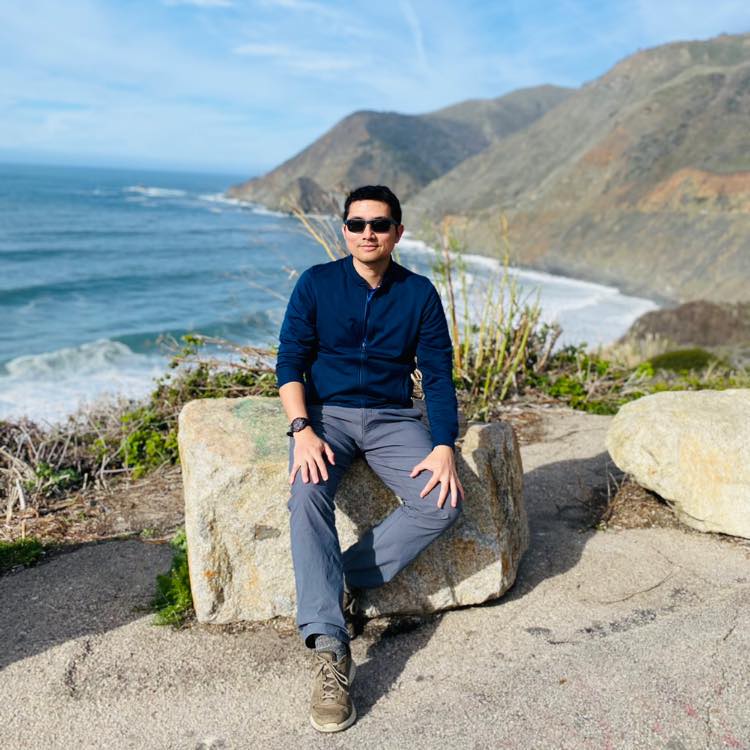
LinkedIn | Doctoral Dissertation | Past Research Projects

Tuan Pham

Fermentum

Lorem Ipsum is simply dummy text of the printing and typesetting industry. Lorem Ipsum has been the industry's standard dummy text ever since the 1500s, when an unknown printer took a galley of type and scrambled it to make a type specimen book. It has survived not only five centuries, but also the leap into electronic typesetting, remaining essentially unchanged.

Elementum

Lorem Ipsum is simply dummy text of the printing and typesetting industry. Lorem Ipsum has been the industry's standard dummy text ever since the 1500s, when an unknown printer took a galley of type and scrambled it to make a type specimen book. It has survived not only five centuries, but also the leap into electronic typesetting, remaining essentially unchanged.

Interdum

Lorem Ipsum is simply dummy text of the printing and typesetting industry. Lorem Ipsum has been the industry's standard dummy text ever since the 1500s, when an unknown printer took a galley of type and scrambled it to make a type specimen book. It has survived not only five centuries, but also the leap into electronic typesetting, remaining essentially unchanged.